
Why KIT Rejects "Special Needs" in Favor of "Disability"
October 23, 2024
Words have the power to shape perceptions and influence behavior. At Kids Included Together (KIT), as advocates for the inclusion of children with disabilities, we choose our language carefully to promote respect and equality. Disability is multifaceted, and people engage with it in diverse ways. While there’s no universal “right” way to discuss disability—especially for those with lived experience or their families—we prioritize language that is clear, respectful, and free from ableist undertones.
Depending on context, we use both identity-first language (e.g., “disabled person”) and person-first language (e.g., “person with a disability”). We also align with the #SayTheWord campaign, led by disability advocate Lawrence Carter-Long, which encourages embracing the term “disability.” In an NPR interview, Carter-Long noted that avoiding “disability” diminishes its impact: “Acting as if disability is merely a ‘difference’ with no real effect is a privileged perspective most disabled people don’t share.”
How Language Shapes Inclusion
Creating inclusive spaces for children with disabilities involves tackling both physical barriers, such as inaccessible facilities, and societal biases, like assumptions about their abilities. The words we use can either reinforce these barriers or help dismantle them, directly impacting how inclusion is perceived and implemented.
While “special needs” is often used with good intentions by educators, caregivers, and parents, many in the disability community view it as patronizing and stigmatizing. Studies show that “special needs” carries negative connotations and creates ambiguity, unlike the clear, direct term “disability.”
Three Reasons We Avoid “Special Needs”
KIT avoids the term “special needs” for the following reasons:
- It implies exceptionality: Every child has needs—whether for communication, social skills, or emotional support. Calling the needs of children with disabilities “special” suggests they’re outside the norm, which misrepresents their humanity.
- It’s an avoidance tactic: “Special needs” is a euphemism that sidesteps direct acknowledgment of disability. We believe disability is a natural aspect of human diversity that deserves straightforward recognition.
- It lacks legal recognition: Unlike “disability,” “special needs” has no standing under laws like the Americans with Disabilities Act (ADA) or Section 504 of the Rehabilitation Act, which ensure access and inclusion rights for children with disabilities.
Needs Are Human, Not “Special”
All children require support to connect, communicate, or navigate challenges. These needs, while varying in scope, are fundamentally human. A humorous World Down Syndrome Day video drives this home: needs are universal, not “special,” regardless of disability.
Terms like “differently abled,” “challenged,” or “special needs” are often used to avoid saying “disability.” At KIT, we see “disability” as a neutral, factual term—not something to fear. As children with disabilities mature, they’re more likely to identify as “disabled” rather than having “special needs.” We encourage children to embrace their identities and advocate confidently for their needs.
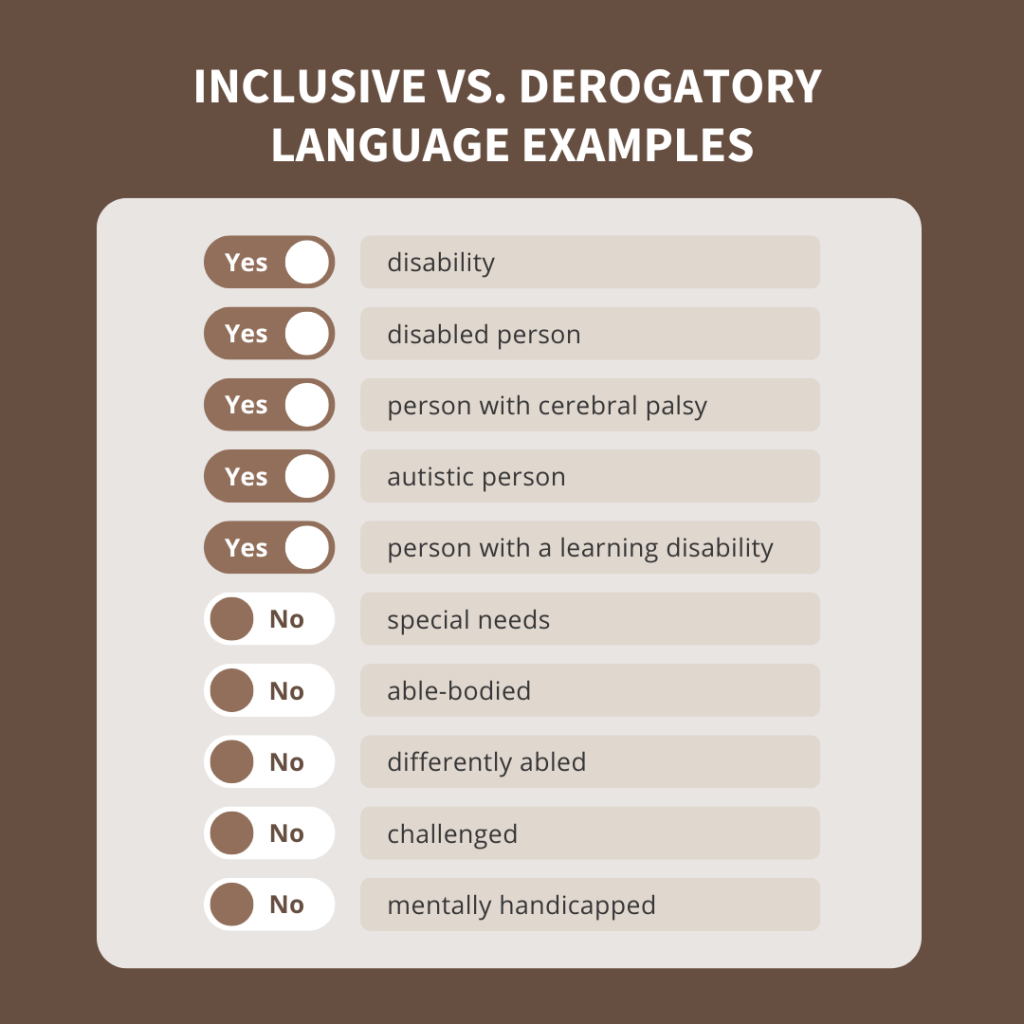
A graphic comparing inclusive and derogatory disability-related terms to guide respectful communication.
Ensuring Inclusion Through Legal Protections
The ADA and Section 504 guarantee children with disabilities equal access to childcare and recreational programs. When educating childcare professionals, we emphasize that these protections are tied to the term “disability.” Using accurate language is essential to upholding these legal rights.
We reject “special needs” because all children have needs, and “disability” is not a negative word. By choosing clear, empowering language, we advocate for the full inclusion of children with disabilities in their communities.
Ready to deepen your understanding of inclusive language? Subscribe to KIT Academy or contact us to learn about our Training and Support Packages for fostering equitable, inclusive environments.