
Fostering Inclusive Environments in Early Childhood Programs
July 15, 2024
Building inclusive communities in early childhood programs creates a nurturing environment where every child feels respected, understood, and included. By embracing inclusive practices, childcare providers support children from varied backgrounds and abilities, fostering enriched learning experiences for everyone.
Research from over 50 studies shows that children with disabilities in inclusive settings demonstrate greater social engagement with peers, form wider friendship circles, and develop stronger social skills compared to those in segregated environments. Additionally, inclusive settings help all children cultivate empathy, gain a broader worldview, and prepare for the diversity they’ll encounter later in life.
Advantages of Inclusive Early Childhood Education
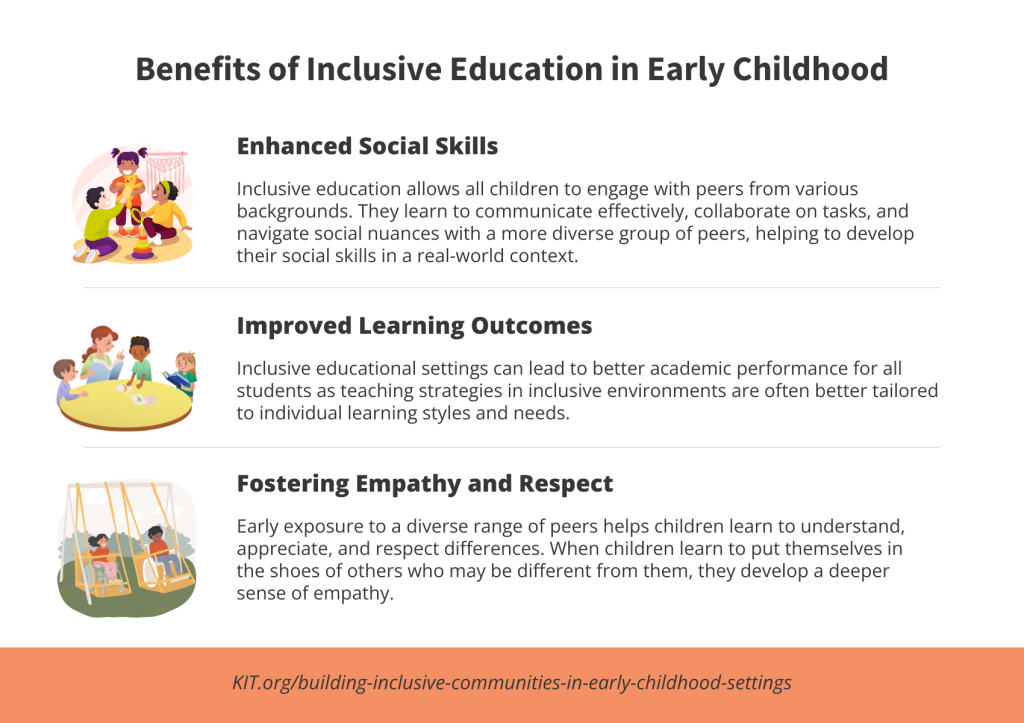
Strengthened Social Skills
Inclusive settings allow children to interact with peers from diverse backgrounds and abilities, helping them learn to communicate, collaborate, and navigate social dynamics. This interaction fosters a sense of belonging and teamwork, equipping children with essential social skills for their early years and beyond.
Enhanced Academic Outcomes
Inclusive environments often feature tailored teaching strategies that cater to individual learning styles, benefiting all students. A diverse group of learners encourages dynamic discussions, creative problem-solving, and critical thinking, leading to improved academic performance across the board.
Cultivating Empathy and Understanding
Early exposure to diverse peers helps children appreciate and respect differences, fostering empathy from a young age. This understanding reduces bullying and discrimination, creating harmonious communities and preparing children to thrive in diverse real-world settings.
Children from diverse backgrounds engage in a collaborative activity in an inclusive early childhood setting.
Strategies for Creating Inclusive Communities
Implementing inclusive practices is essential to ensuring every child feels valued and supported. Below are key strategies to foster inclusion in early childhood programs:
Designing an Inclusive Curriculum
An inclusive curriculum reflects the diversity of the children in the program and integrates varied perspectives into its core. This includes incorporating books, stories, and activities that represent different cultures, abilities, and experiences, such as disability culture, ensuring all children see themselves in their learning.
Ongoing Staff Training
Continuous professional development is critical for educators to build skills in fostering inclusive environments. Training programs, workshops, and courses on disability inclusion equip staff with strategies to meet diverse learning needs. For example, KIT Academy provides resources like how-to videos, virtual webinars, and printable guides. Contact us to explore tailored training packages for your organization.
Collaborating with Families and Communities
Strong partnerships with families and community members are vital for inclusion. Regular communication, understanding family backgrounds, and involving them in their child’s learning fosters consistency. Hosting community events, forming advisory groups, or engaging in outreach strengthens these connections and supports children’s well-being.
Creating Accessible Environments
Accessibility is key to inclusion, encompassing physical spaces, learning materials, and teaching methods. Use diverse teaching approaches—visual, auditory, and kinesthetic—to address varied learning styles. Technology, such as adaptive tools, can further enhance accessibility for all learners.
Invest in Inclusion with KIT
Fostering inclusive early childhood programs nurtures compassionate, informed, and socially aware individuals. Inclusive practices lay a strong foundation for all children, preparing them for diverse real-world settings while promoting a more equitable society.
Kids Included Together (KIT) has been a leader in disability inclusion for over 25 years, offering evidence-based training to empower organizations, program leaders, and staff. Our curriculum provides practical tools and insights to implement inclusive practices and behavior support strategies effectively.
Ready to enhance inclusion in your program? Subscribe to KIT Academy or contact us to learn about our tailored Training and Support Packages for inclusive early childhood education.